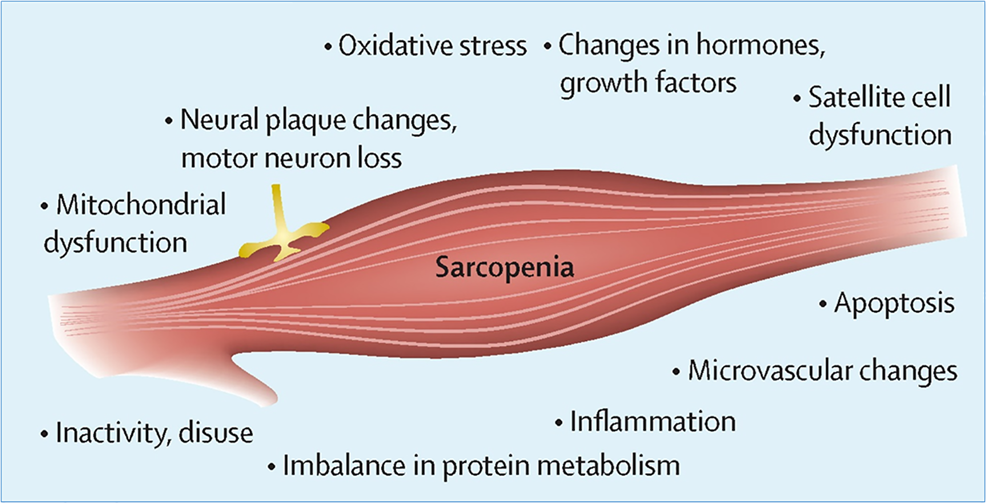

Sarcopenia is a condition characterized by the gradual loss of muscle mass, strength, and physical function that commonly occurs as people age. It is a natural part of the aging process, but it can significantly affect a person’s mobility, balance, and overall quality of life if not addressed. Sarcopenia typically begins as early as the fourth decade of life and becomes more noticeable after the age of 60. As muscle tissue decreases, individuals may experience weakness, slower walking speed, difficulty climbing stairs, reduced endurance, and a higher risk of falls and injuries.
Several factors contribute to the development of sarcopenia. Aging naturally leads to changes in muscle metabolism and hormone levels, but lifestyle factors also play an important role. A lack of regular physical activity, particularly strength or resistance training, can accelerate muscle loss. Inadequate protein intake, poor nutrition, chronic illnesses, inflammation, and long periods of inactivity or bed rest can further worsen the condition.
The good news is that sarcopenia can often be prevented or slowed with the right lifestyle habits. Regular physical activity, especially resistance or strength training exercises, helps stimulate muscle growth and maintain muscle strength. Activities such as walking, balance exercises, and flexibility training also support mobility and reduce the risk of falls. In addition, maintaining a balanced diet that includes sufficient protein, vitamins, and essential nutrients is important for preserving muscle health. By staying active and maintaining good nutrition, individuals can help protect their muscles, remain independent, and enjoy a healthier quality of life as they age.